

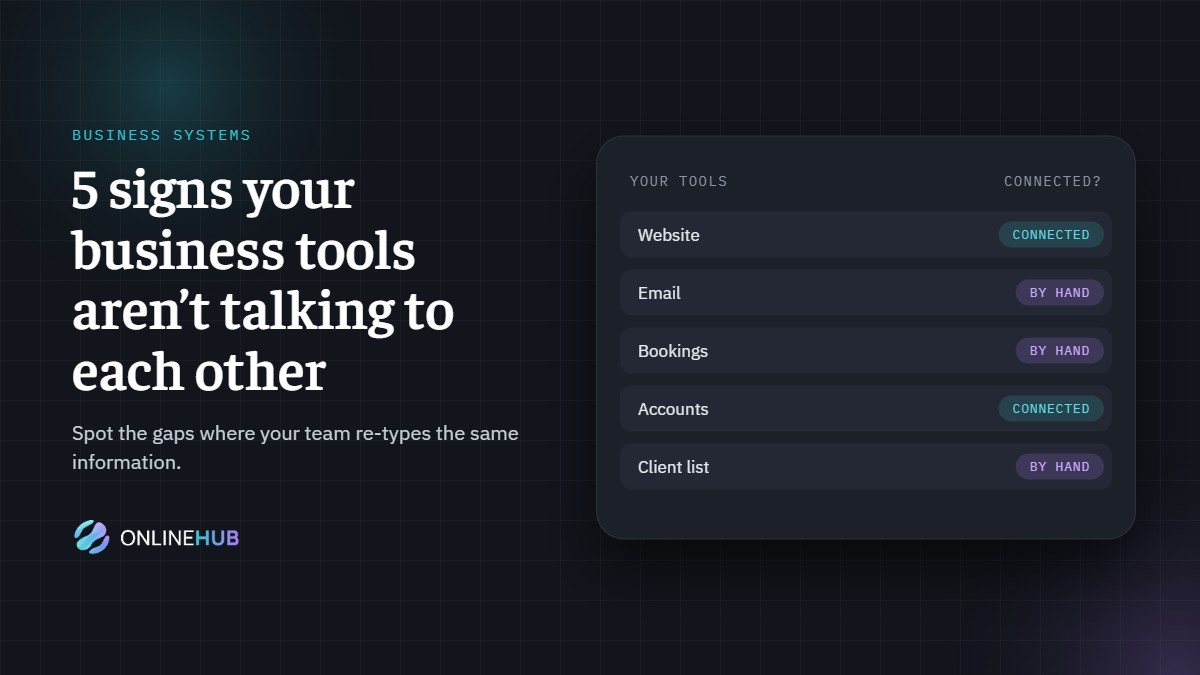
5 signs your business tools aren’t talking to each other
Most small businesses don’t have one big system. They have a website, an email inbox, a booking tool, a spreadsheet or two, an accounting package and a WhatsApp group that holds everything together. Each tool does its job. The trouble starts in the gaps between them, because those gaps are filled by people, by hand, every single day.
Here are five signs your tools aren’t talking to each other, and what it’s costing you.
1. The same information gets typed more than once
An enquiry comes in through the website. Someone copies the details into a spreadsheet. Then into a quote. Then into the accounting system when the invoice goes out. Every re-type is time lost, and another chance for a typo in a name, a date or an amount.
What good looks like: details are captured once, at the source, and flow to wherever they’re needed.
2. Nobody is quite sure which version is the right one
There’s the spreadsheet on the shared drive, the copy someone saved to their desktop, and the “final final” version in an email attachment. When the numbers don’t match, a meeting gets called to work out which one to trust.
What good looks like: one place where the real information lives, which everyone can see.
3. Follow-ups depend on someone remembering
Quotes that never get chased. Invoices that slip past their due date. A client who asked a question on Friday and is still waiting on Tuesday. When follow-ups live in people’s heads, they get missed the moment things get busy, which is exactly when they matter most.
What good looks like: reminders that go out on time, automatically, and a clear list of what still needs a human.
4. You’re paying for tools that overlap
Two email services. A booking system and a calendar app doing the same job. A subscription someone signed up for three years ago that nobody uses. Small monthly amounts add up quietly, especially when they’re spread across different cards and accounts.
What good looks like: a short list of tools, each with a clear job, and nothing paid for twice.
5. Only one person knows how it all works
If a key staff member goes on leave and the business wobbles, your systems are living in that person rather than in the business. That’s a risk for you, and for them.
What good looks like: processes that are written down, set up properly and easy for anyone on the team to follow.
The fix is usually smaller than you think
You rarely need to throw everything out and start again. Most of the time it’s about connecting the tools you already have, so an enquiry becomes a client record, a booking becomes a confirmation, and an invoice lands in your accounts without anyone touching it.
Not sure where to start?
Start with a quick call. We’ll talk through how your business runs today, where the time is going, and whether a full systems audit is the right next step. No jargon, no hard sell.